
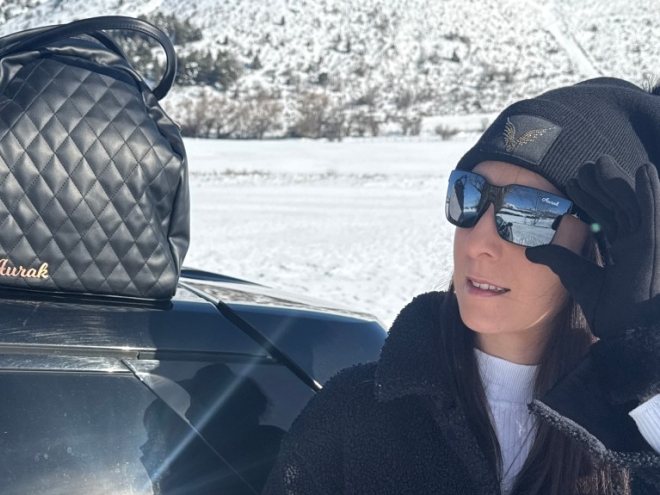

What is snow blindness?
Understand, prevent and treat this eye burn in the mountains
You return from a magnificent day of skiing, but your eyes burn, tear up and turn red? You may be suffering from snow blindness, also called "sunburn of the eyes". This little-known phenomenon affects thousands of skiers and hikers every year. Follow us, we'll explain everything...
Snow blindness: definition
Snow blindness is a painful inflammation of the cornea caused by overexposure to ultraviolet (UV) rays. The exact medical term is photokeratitis or actinic keratitis.[web:62][web:65]
How does it happen?
Just like your skin can get sunburned, your eyes can literally burn under the effect of UV rays. In the mountains, this risk is doubled by two factors:
- Altitude: we lose 10-12% of natural UV filter every 1000m of elevation (thinner atmosphere)[web:65][web:73]
- Albedo effect: snow reflects up to 80% of UV rays, turning the ground into a giant mirror that bombards your eyes from below[web:65][web:73]
Result? Your eyes receive a much higher UV dose than they can handle, and the corneal cells are literally burned.[web:62][web:67]
Snow blindness symptoms
Progressive appearance
Sneaky feature: symptoms don't appear immediately. They usually manifest 6 to 12 hours after exposure, often at the end of the day or during the night.[web:62][web:67][web:68]
Characteristic signs
You can recognize snow blindness by:
- ✅ Intense pain in the eyes (gritty or burning sensation)
- ✅ Abundant tearing and uncontrollable
- ✅ Significant redness of the eyes
- ✅ Photophobia (extreme light sensitivity)
- ✅ Foreign body sensation in the eye
- ✅ Blurred vision
- ✅ Eyelid swelling
- ✅ Associated headaches
Who is affected?
Snow blindness doesn't just affect skiers! Those concerned include:
- ? Skiers and snowboarders (especially beginners who forget protection)
- ? Mountain hikers (snow + altitude)
- ⛷️ Cross-country skiers (long exposure)
- ? Mountaineers (high altitude + glaciers)
- ? Sledders and walkers (often without protection)
- ?️ Mountain photographers (focus on camera = forget protection)
Prevention: how to avoid snow blindness
Eye protection is mandatory
The golden rule: NEVER ski, hike or even walk in the mountains without proper eye protection.
At Aurak, two protection options:
1. Ski goggles
Aurak ski goggles offer optimal protection:[web:61]
- Full field of vision coverage
- Lateral protection against reflected UV
- WLA anti-fog technology (34 air vents)
- Double lens for thermal insulation
- Category 3 lenses
Goggle advantages:
- Maximum protection (no lateral UV entry)
- Perfect hold even in action
- Protection against wind and cold
2. Sunglasses
Aurak EVO sunglasses for less intense activities:
- Certified 100% UV protection
- Category 3 polarized lenses
- Exceptional lightness (17g)
- Adjustable nosepad (3 sizes)
- Unbreakable Grilamid TR90 material
Sunglasses advantages:
- Versatility (spring skiing, hiking, city)
- Lightweight and comfortable
- Elegant style
⚠️ Beware of misconceptions
- ❌ "It's cloudy, I'm safe" → FALSE, 80% of UV passes through clouds[web:62]
- ❌ "I'm only staying an hour" → FALSE, 30 minutes is enough for snow blindness
- ❌ "I'm in the shade" → FALSE, reflection still reaches you
The albedo effect: understanding the phenomenon
Why is snow so dangerous?
Snow has an albedo of 80%, meaning it reflects 80% of the UV rays it receives.[web:65][web:73]
Comparison with other surfaces:
- Fresh snow: 80-90% reflection
- Sand: 15-25%
- Water: 10-20%
- Grass: 3-5%
- Asphalt: 5-10%
Consequence: In snowy mountains, your eyes receive UV:
- Directly from the sun (from above)
- Reflected by snow (from below)
That's a double exposure explaining the severity of snow blindness cases.[web:65]
Altitude worsens the risk
The higher you go, the thinner the atmosphere filters UV less:
- 1000m: +10% UV compared to sea level
- 2000m: +20% UV
- 3000m: +30% UV[web:65][web:73]
At 3000m on snow, your eyes receive over twice the UV dose than at the beach.
Aurak eye protection
At Aurak Protection, we never compromise between safety, comfort and style. That's why we've developed a complete range to protect your eyes in all situations.
Aurak ski goggles
Maximum protection for the slopes:
- Permanent WLA anti-fog technology
- Double lens with insulating air chamber
- 34 air vents for optimal ventilation
- Certified 100% UV protection
- OTG compatible (prescription lens adapters)
- Category 3 lenses
- Compatible with a yellow lens specially designed for whiteout conditions
- French elegant design
Ideal for: Alpine skiing, snowboarding, intensive cross-country skiing
Aurak EVO sunglasses
Versatility and elegance:
- Category 3 polarized lenses
- 100% UV protection
- Unbreakable Grilamid TR90
- Only 17g (extreme comfort)
- Adjustable nosepad (3 sizes)
- Refined design matching our helmets
Ideal for: Spring skiing, hiking, city, driving
Why choose Aurak?
- ✅ Rigorous certifications (laboratory tested)
- ✅ French quality recognized
- ✅ Rated 4.9/5 by our customers
- ✅ 2-year warranty
- ✅ Fast delivery (2 days in mainland France)
The essentials to remember
Snow blindness is:
- A corneal burn from UV rays
- Very painful but usually without aftereffects
- 100% preventable with proper protection
To protect yourself:
- ALWAYS wear certified 100% UV goggles or sunglasses
- NEVER underestimate the danger, even on cloudy days
- Invest in quality equipment (your eyes are worth it)
Your eyes are precious. Protect them with Aurak.


